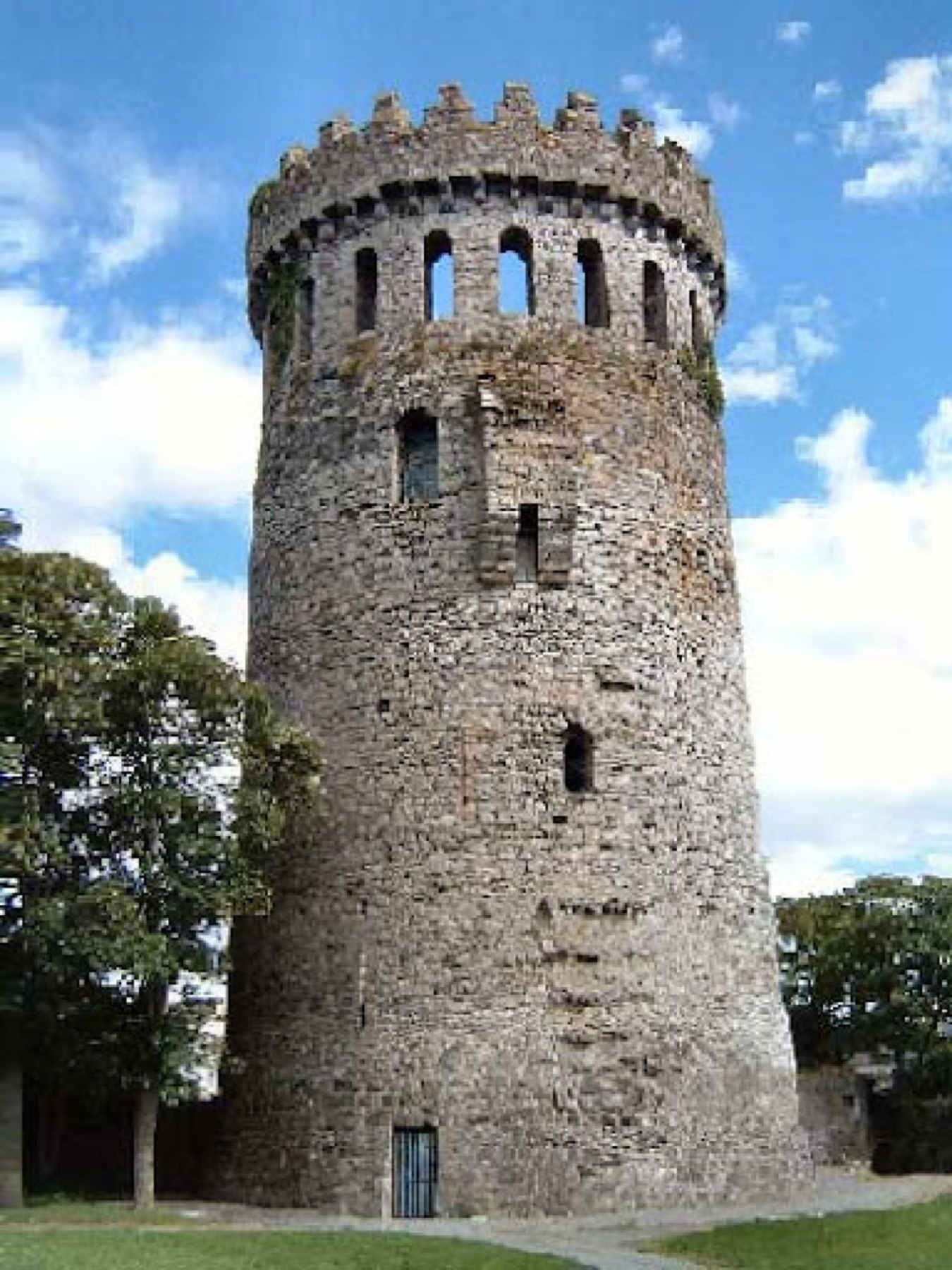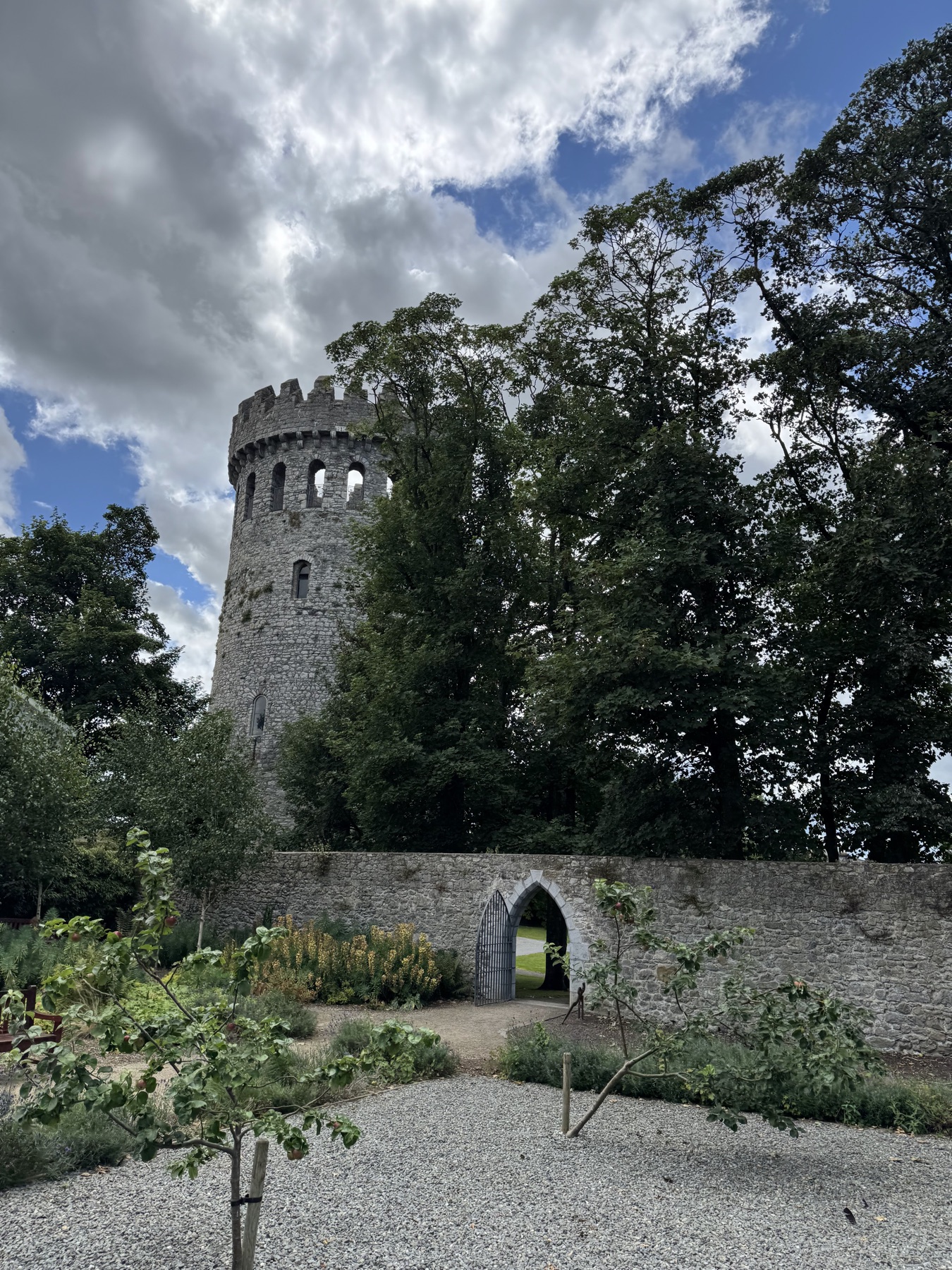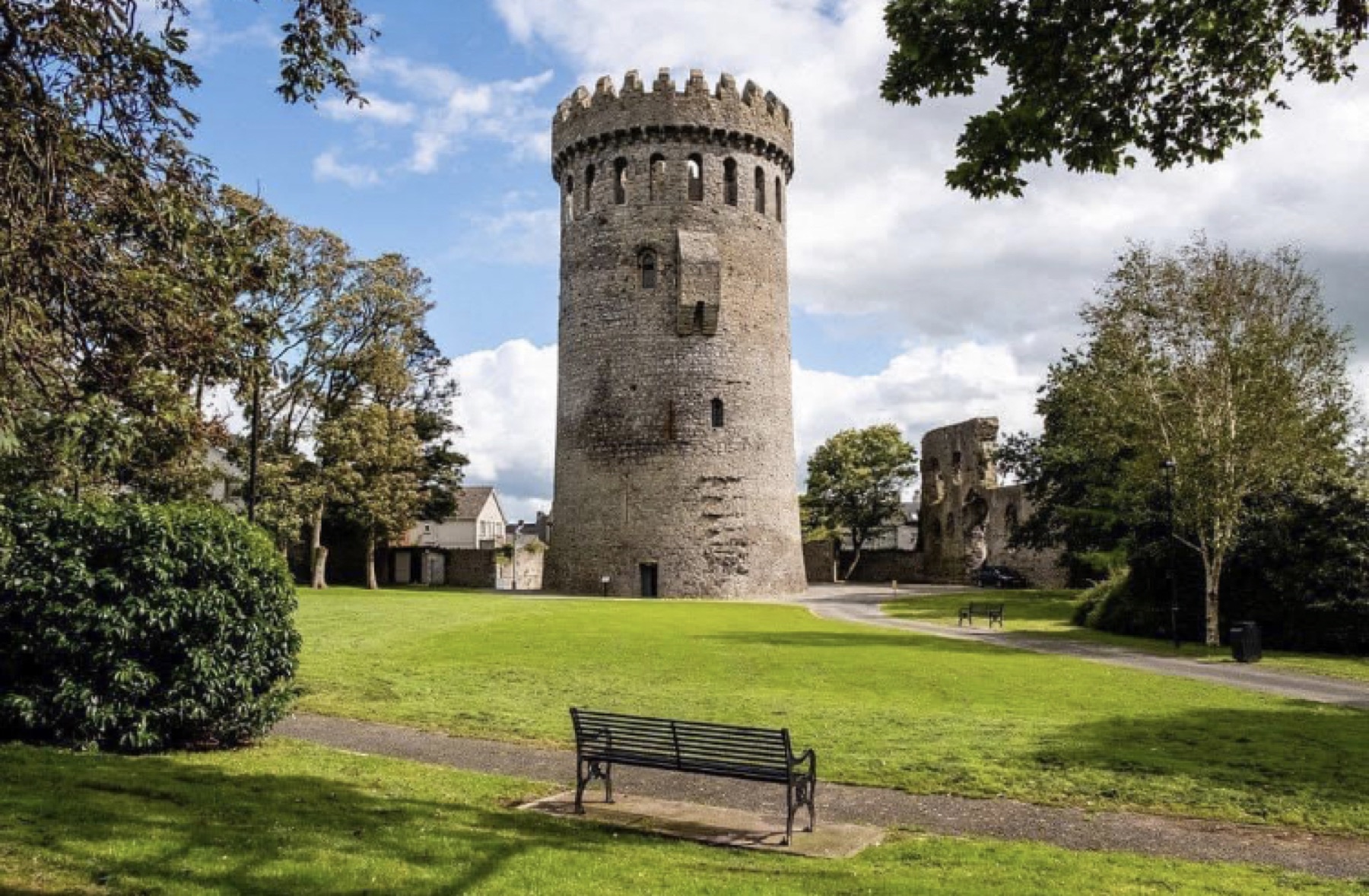
Nenagh Castle, the round keep
An tAonach · County Tipperary

The HistoryofNenagh

From the ancient fairs that gave the town its name to the Norman keep, the friary and the old gaol — the story of a Tipperary town, told in stone.

Begin
IThe Story

The Town of the Fair

Nenagh — from the Irish Aonach Urmhumhan, “the Fair of Ormond” — takes its very name from the great fairs and assemblies held here since early medieval times. The county town of North Tipperary grew up where routes met and people gathered, and its long story is written in stone: a towering Norman keep, a ruined friary, a military barracks and the grim walls of a Victorian gaol.

Set in the lowlands of Lower Ormond, between the Silvermine Mountains and the broad waters of Lough Derg, Nenagh has been a place of gathering for well over a thousand years. The fairs that gave the town its name — the aonach — drew traders, herders and pilgrims long before the Normans arrived.

In the early thirteenth century the land was granted by King John to Theobald Walter, who was appointed Chief Butler of Ireland and founded the Butler dynasty. He and his son raised the great circular keep, around 1200–1220, and Nenagh became the Butlers' chief seat until they moved to Kilkenny in the fourteenth century. A Franciscan friary was founded in 1252 — in time one of the richest religious houses in Ireland and home to the chronicle known as the Annals of Nenagh — while the Butlers also endowed the priory and hospital of St John the Baptist at nearby Tyone.

For eight centuries the great round keep has stood watch over the town.

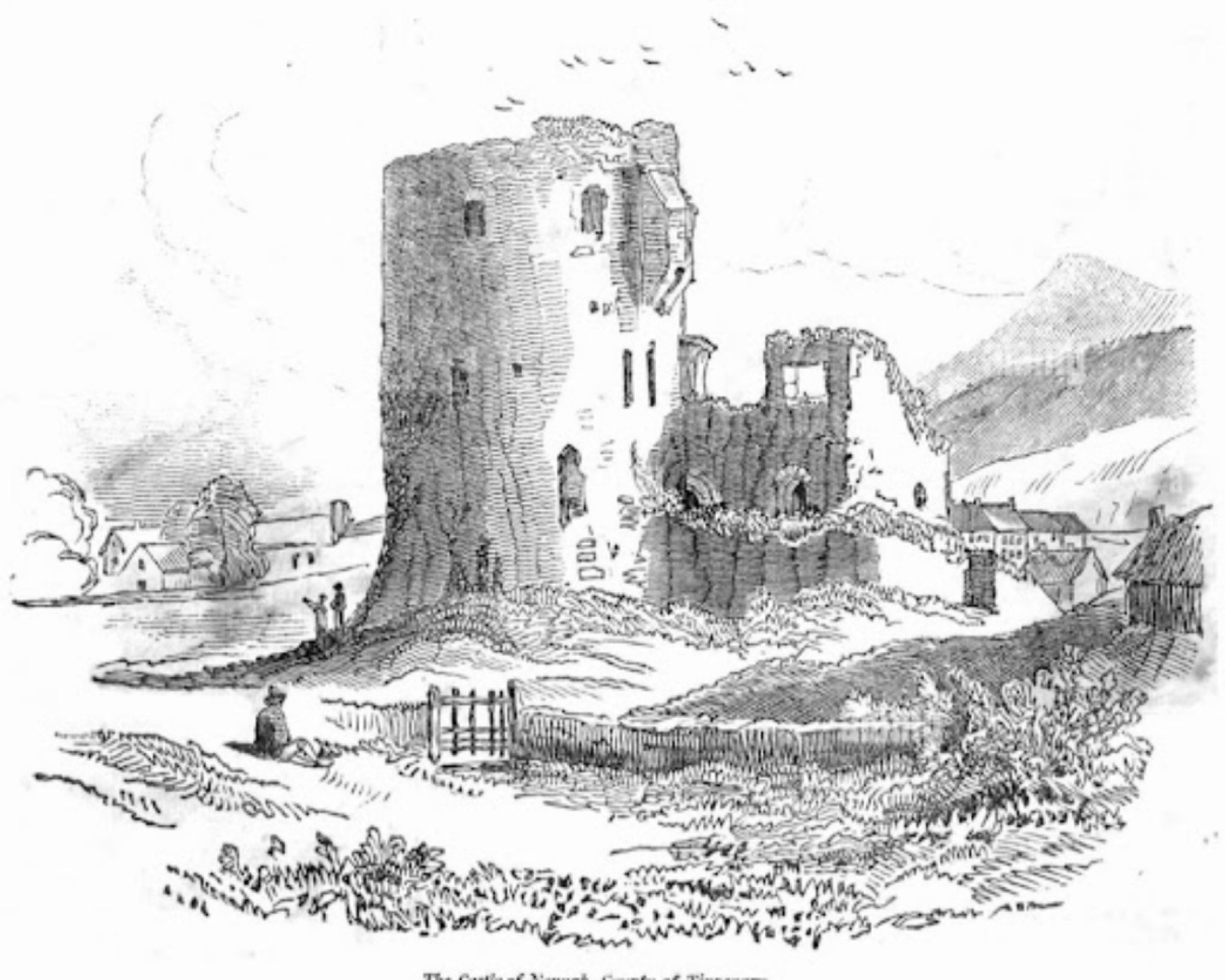
War shadowed the medieval town. It was burned by the O'Carrolls in 1550; the castle was besieged and changed hands repeatedly through the 1640s, falling to a Cromwellian force under Henry Ireton in 1650; and the town was put to the torch by Patrick Sarsfield in 1688. A military barracks at Summerhill, the county gaol, the courthouse and the railway all followed in the centuries after.

In 1838 Nenagh became the administrative capital of Tipperary's North Riding, and the Victorian town that resulted still stands. Today its keep, friary, barracks, gaol and courthouse lie within a few minutes' walk of one another, and the town remains, as it always was, a place where people come together.

IIA Timeline

Eight Centuries, in Brief

Early medieval

Aonach Urmhumhan

Long before the town, this was the site of the Fair of Ormond — the aonach, a great fair and assembly that gave Nenagh its name.

c. 1200–1220

The Norman keep rises

Land granted by King John to Theobald Walter, Chief Butler of Ireland; he and his son raise the great circular keep, founding the Butler dynasty's chief seat.

1252

The Franciscan friary

A Franciscan friary is founded in the reign of Henry III, becoming one of the richest religious houses in Ireland and home to the Annals of Nenagh.

1550

The town is burned

Nenagh and its friary are burned by the O'Carrolls, one of many blows in a turbulent late-medieval century.

1650

The Cromwellian siege

After changing hands repeatedly through the 1640s, the castle falls to a Cromwellian force under Henry Ireton.

1688

Sarsfield burns the town

During the Williamite war the Jacobite commander Patrick Sarsfield puts Nenagh to the torch.

c. 1750

The military barracks

An infantry barracks is built at Summerhill — later enlarged in 1832 — garrisoning the town for nearly two centuries.

1838

Capital of the North Riding

Tipperary is divided into two ridings and Nenagh becomes the administrative capital of the North Riding.

1843

Courthouse & county gaol

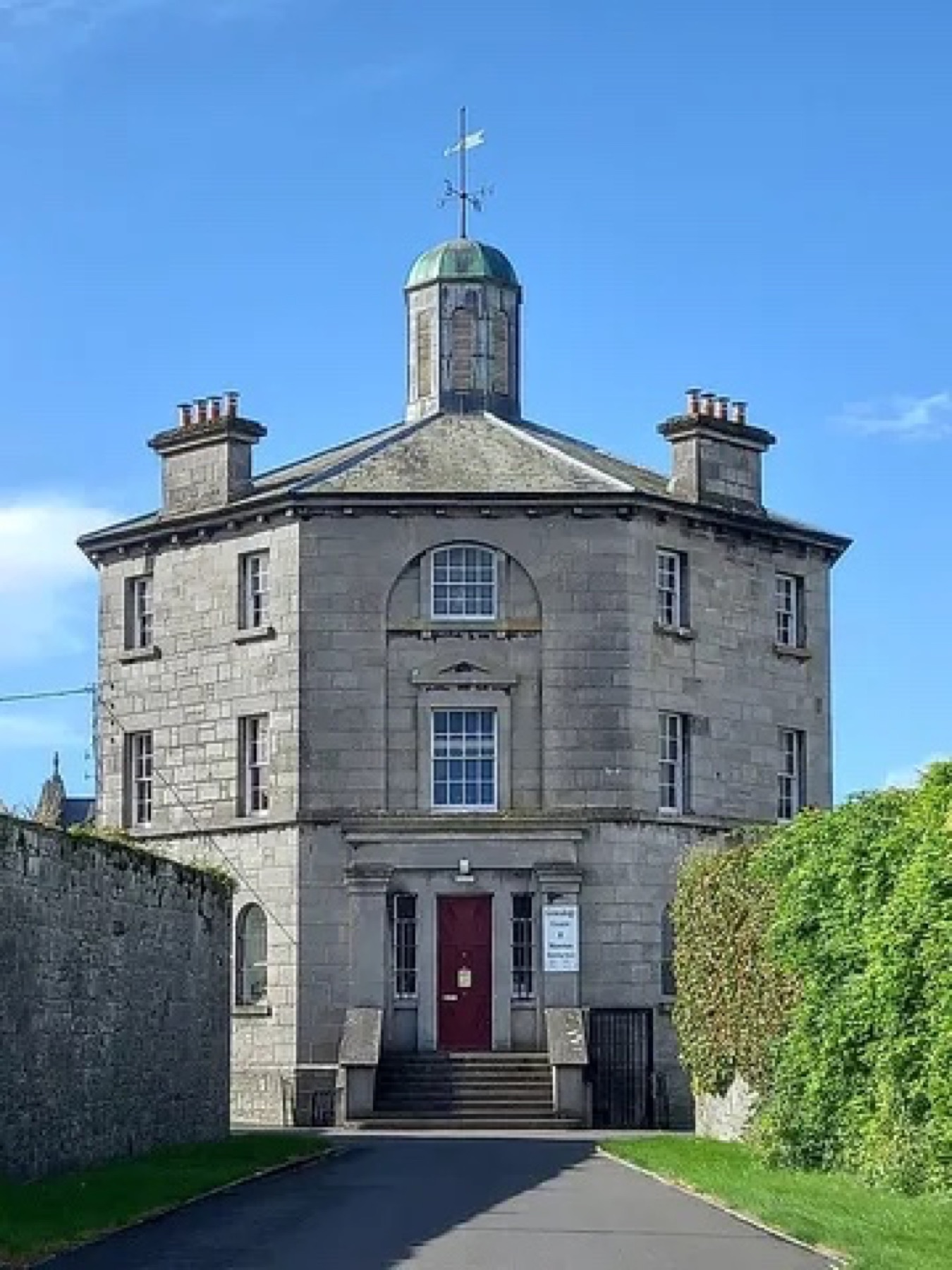
The courthouse is built to a design by John B. Keane; the county gaol, with its octagonal Governor's House, follows in the 1840s — as the Great Famine grips the district.

1863

The railway arrives

The railway station opens on 5 October, on the Limerick–Ballybrophy line, reshaping trade and travel.

1895

St Mary's of the Rosary

The neo-Gothic church is built to a design by Walter G. Doolin, in Lahorna stone and Portroe slate.

Today

County town

Nenagh remains the county town of Tipperary, its medieval and Victorian landmarks carefully preserved.

Compiled from published sources, including Wikipedia and the National Inventory of Architectural Heritage; best confirmed against local records such as the Nenagh & District Heritage Centre.

IIILandmarks & Monuments

The Town Written in Stone

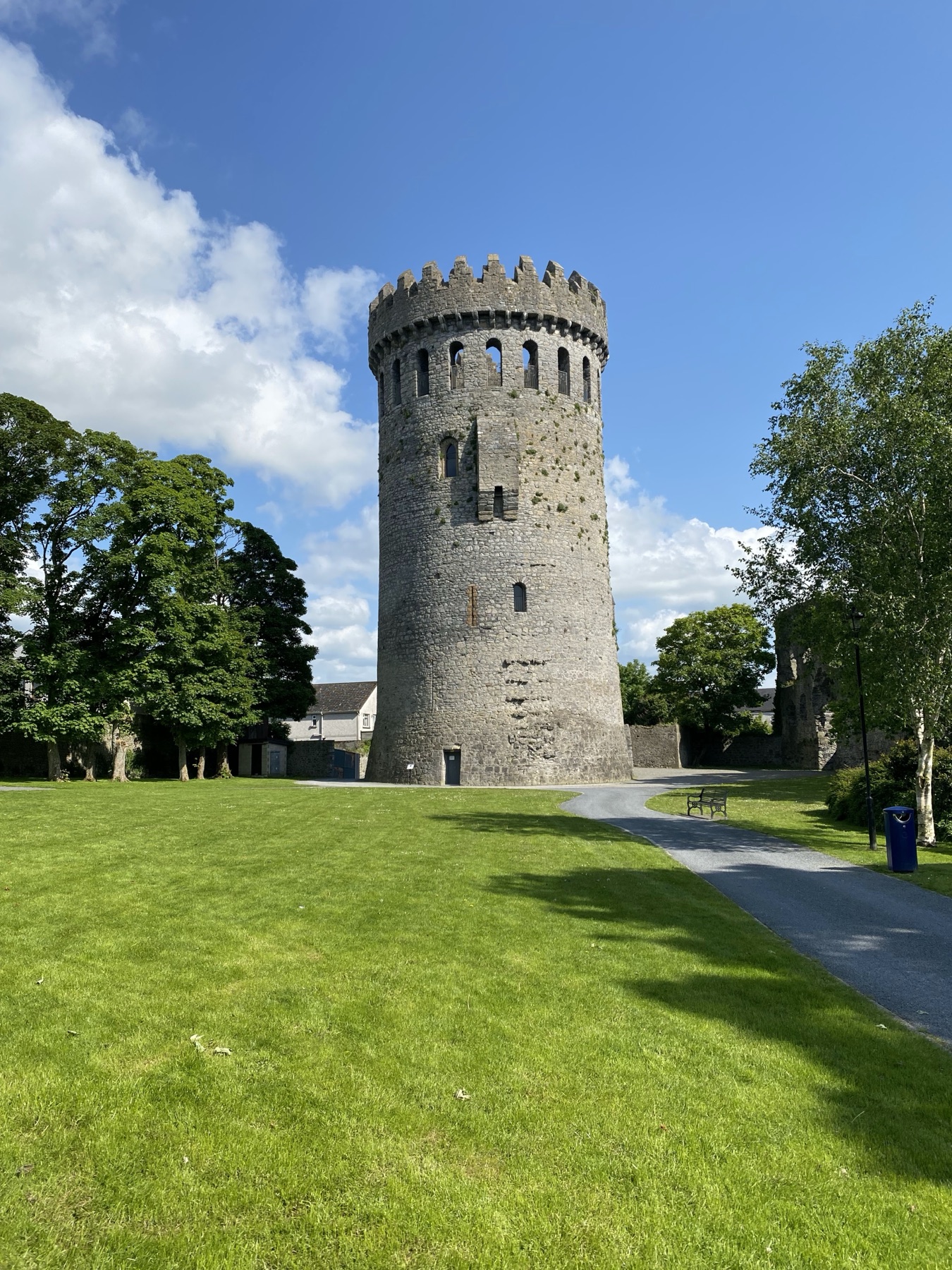
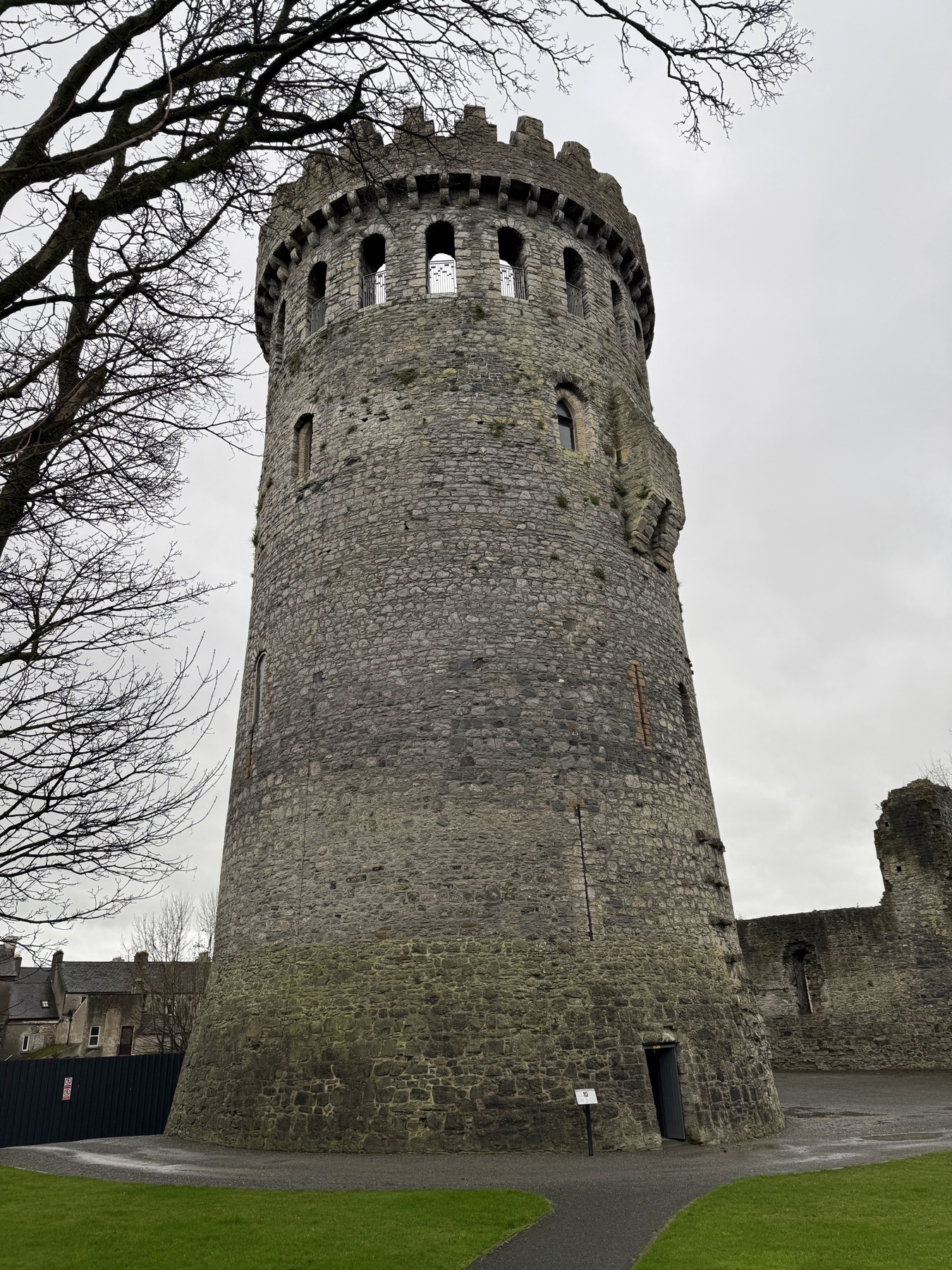
Nenagh Castle (The Round Keep)
c. 1200–1220

Nenagh Castle (The Round Keep)

Nenagh's defining landmark and one of the finest Norman round keeps in Ireland. The land was granted by King John to Theobald Walter — first Chief Butler of Ireland — and the great keep was raised by Theobald and his son around 1200–1220 as the strong-point of a much larger castle with curtain walls and gate-towers. It rises over 30 metres, on a base some 16 metres across; its crown of crenellations and clerestory windows was added in 1861, at the instigation of Bishop Michael Flannery. Nenagh was the Butlers' chief seat until they moved to Kilkenny in the fourteenth century.

Nenagh Franciscan Friary
Nenagh Franciscan FriaryPhoto: Andreas F. Borchert / Wikimedia Commons · CC BY-SA 4.0
founded 1252

Nenagh Franciscan Friary

Founded in 1252, in the reign of Henry III, the friary grew into one of the richest religious houses in Ireland and the head of the Franciscans' Irish custody. It gave its name to the Annals of Nenagh, a medieval chronicle compiled here. Burned by the O'Carrolls in 1550 and later suppressed — its last friar, Fr Patrick Harty, died in 1817 — its surviving windows and walls still speak of its scale and craft.

Nenagh Gaol & Heritage Centre
1840s

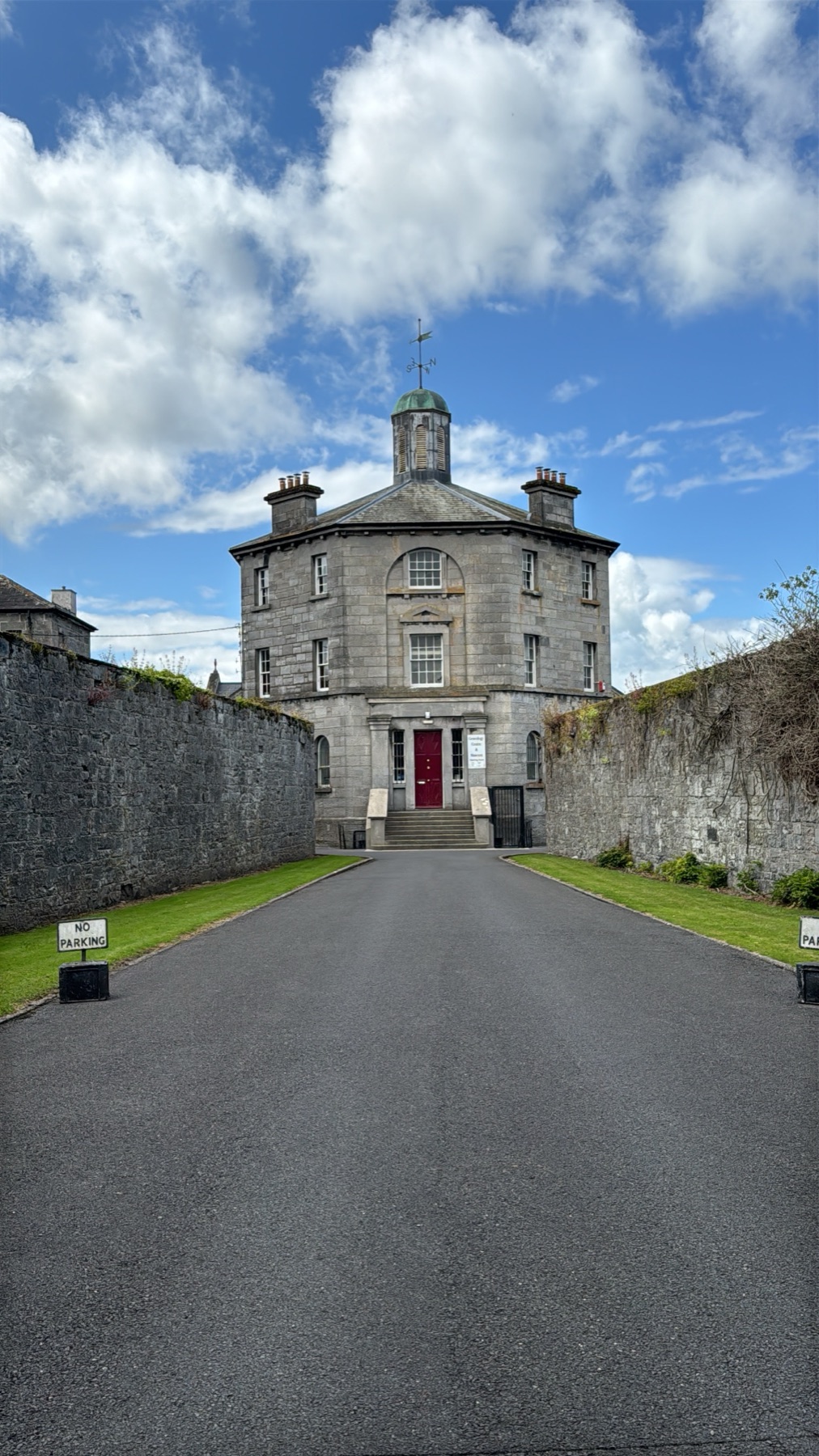
Nenagh Gaol & Heritage Centre

The County Gaol was built in the 1840s on a radial, panopticon-inspired plan. Its striking octagonal Governor's House — pictured — and the great limestone gatehouse survive, the gatehouse now home to the Nenagh & District Heritage Centre, which tells the story of the town and of the lives once held within these walls.

St Mary's of the Rosary
St Mary's of the RosaryPhoto: Cathal / Geograph · CC BY-SA 2.0
built 1895

St Mary's of the Rosary

A soaring neo-Gothic church at the heart of Catholic Nenagh, built in 1895 to a design by the architect Walter G. Doolin. It was raised largely from local materials — Lahorna stone and Portroe slate, with only the Portland stone of its arches brought in — and its spire remains a fixed point on the town's skyline.

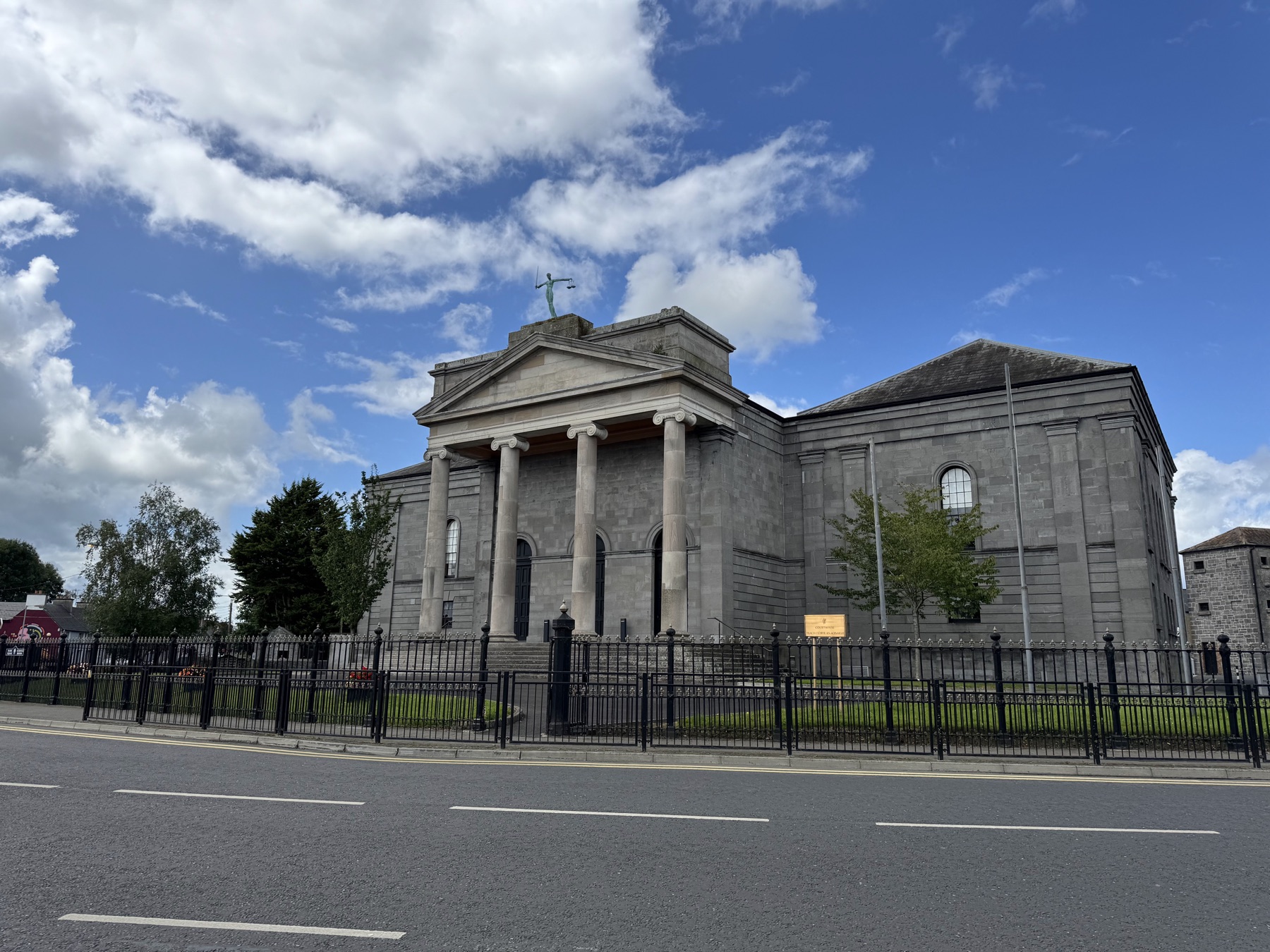
Nenagh Courthouse
Nenagh Courthouse
built 1843

Nenagh Courthouse

Built in 1843 to a design by the architect John B. Keane, the courthouse is a statement of Victorian civic confidence, its columned portico facing the town. It dates from the years after 1838, when Nenagh became the administrative capital of Tipperary's North Riding.

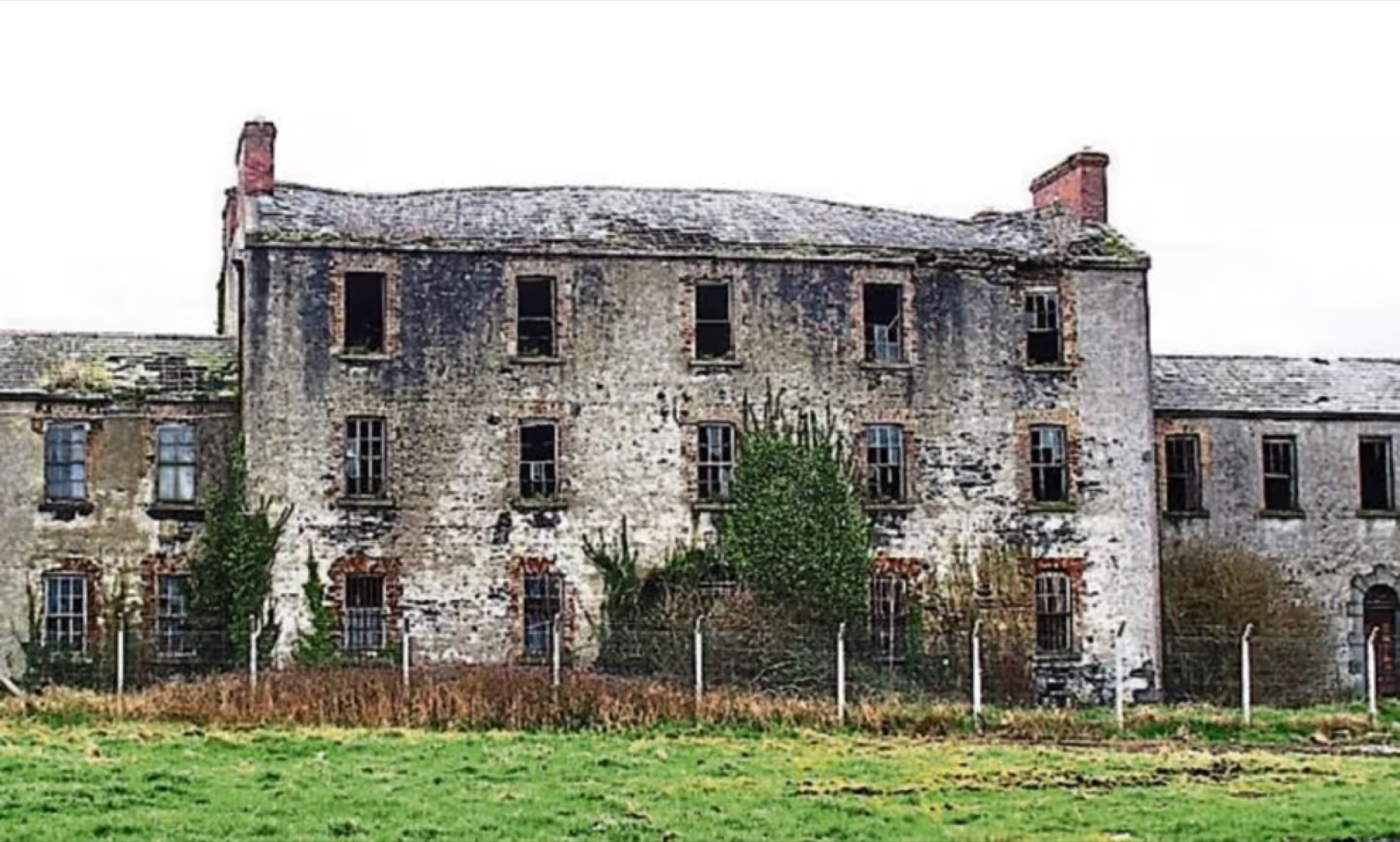
The Military Barracks, Summerhill
c. 1750, enlarged 1832

The Military Barracks, Summerhill

Nenagh was a garrison town for the better part of two centuries. An infantry barracks was built at Summerhill around 1750 and greatly enlarged in 1832 — a near-pentagonal complex of troop quarters, armoury, stables, prison and hospital, ringed by a bastioned wall. It saw the 'Battle of the Breeches', a mutiny of the North Tipperary Militia in July 1856, and was handed over from the British Army to the new Irish state in 1922. Much of it still stands at Summerhill — weathered and roofless now, and the subject of local efforts to preserve it.

Banba Square & the Markets
Banba Square & the MarketsPhoto: Gramscis cousin / Wikimedia Commons · CC BY-SA 3.0
centuries of trade

Banba Square & the Markets

The civic heart of Nenagh and the living descendant of the Aonach Urmhumhan, the Fair of Ormond. For generations the square and the surrounding streets have hosted the markets and fairs — the gatherings that gave the town both its purpose and its very name.